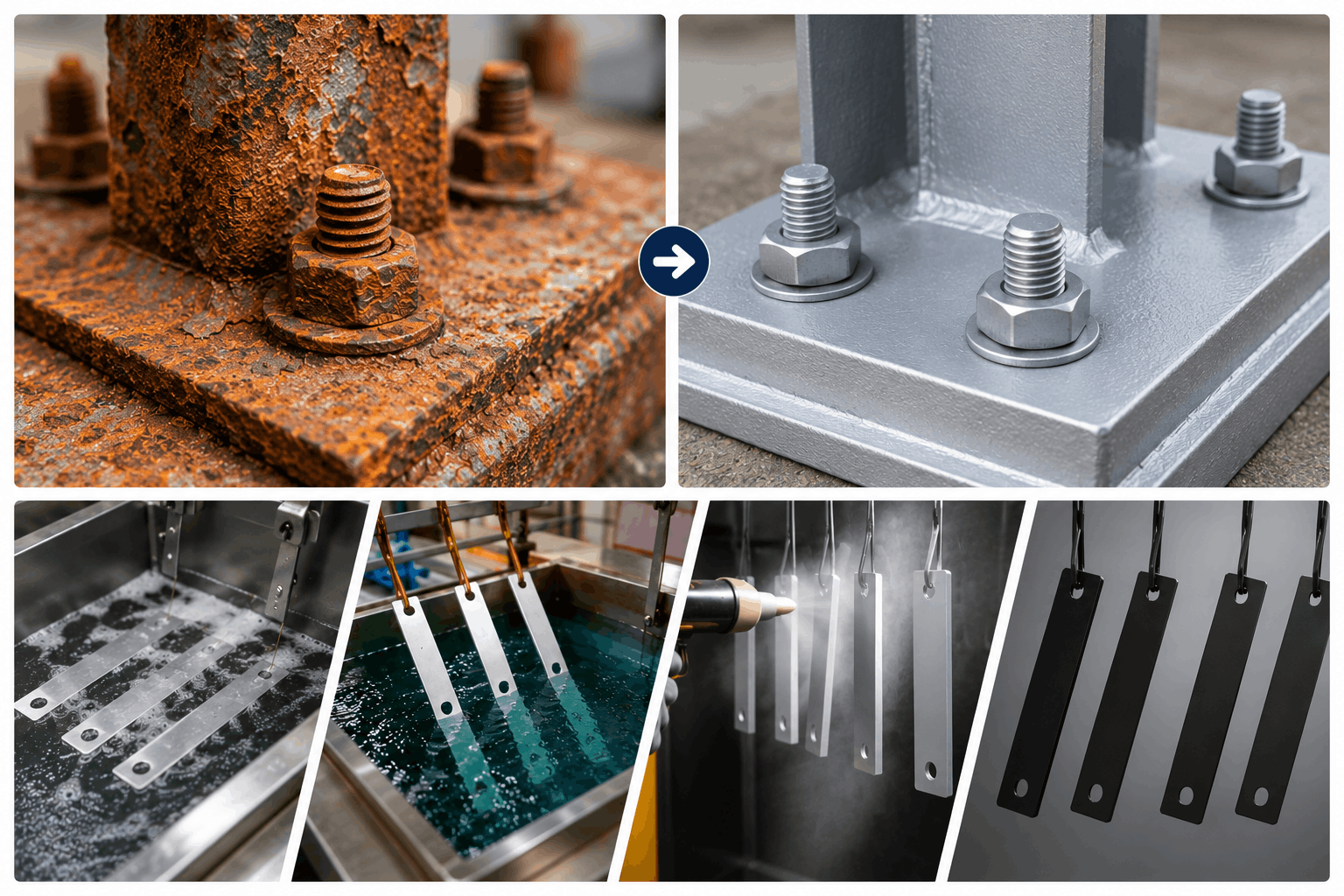
Max Performance with Trivalent Blue Chromating

Trivalent blue chromating is now a widely adopted process in electroplating, offering effective surface protection and aesthetic value for many types of metal components. With increasing industrial needs for durable and attractive finishes, this method provides an efficient way to enhance corrosion resistance and visual quality. As technology advances, trivalent blue chromating continues to grow in importance within modern electroplating practices.
What Is Trivalent Blue Chromating
Trivalent blue chromating is a conversion coating method primarily used on zinc or zinc-alloy electroplated parts. It involves immersing metal components in a solution containing trivalent chromium compounds. A chemical reaction occurs, forming a thin, uniform layer that offers corrosion resistance and a distinctive blue finish. Unlike older hexavalent processes, this method uses chromium in its trivalent state, making it more suitable for widespread industrial application.
Benefits for Electroplated Components
This chromating process brings multiple benefits to electroplated components. It improves corrosion protection by adding a barrier against moisture and surface degradation. The blue finish not only enhances appearance but also acts as a preparation layer for additional coatings or paints. Components that undergo this process are less likely to experience premature failure, making them more reliable in long-term applications.
Applications in Key Industries
Trivalent blue chromating is commonly applied across automotive, aerospace, and electronics sectors. In automotive manufacturing, it protects fasteners and underbody hardware. Aerospace companies apply it to lightweight yet exposed metal parts requiring both strength and corrosion resistance. Electronic components like housings and terminals also benefit from the protective and conductive properties of this surface treatment.
New Developments in Chromating
Recent innovations in this area of electroplating have improved coating consistency, durability, and appearance. New bath additives have been developed to enhance adhesion and control layer thickness. Automation in application methods has enabled more precise parameter management, resulting in improved surface uniformity. These updates make trivalent blue chromating suitable for even more specialized uses across modern manufacturing lines.
Managing Process Challenges
Achieving consistent results with trivalent blue chromating can present challenges. Manufacturers must carefully control bath temperature, composition, and immersion timing. Variations may affect color consistency and layer performance. Ensuring proper surface cleaning before chromating is also crucial, as contamination can reduce coating effectiveness. These challenges highlight the need for reliable process control in electroplating plants.
Quality Checks and Monitoring
Quality control plays a critical role in trivalent blue chromating. Bath solution should be regularly tested for chromium concentration and chemical balance. Thickness and corrosion resistance testing should be done on finished parts to confirm the coating meets required specifications. These measures ensure the coating remains reliable and consistent throughout production runs.
Trivalent vs. Hexavalent Chromating
Compared to hexavalent chromating, trivalent blue chromating offers safer handling and comparable performance for most industrial needs. While hexavalent methods may offer slightly higher resistance in extreme environments, the trivalent process provides a safer alternative that still meets corrosion protection requirements. This makes it a preferred choice for companies aiming to modernize their electroplating operations.
Future Role in Electroplating
As electroplating continues to evolve, trivalent blue chromating is expected to play a growing role in metal finishing. Its balance of protection, aesthetics, and operational safety makes it a strong fit for high-performance industries. With continuous innovation, this coating method will remain relevant in delivering dependable, durable results in surface finishing technologies.
References
- "Advances in Trivalent Chromating Technologies" – Surface Engineering Journal, 2023
- "Corrosion Resistance of Trivalent Chromate Coatings" – Electroplating and Surface Finishing Review, 2022
- "Process Optimization in Trivalent Chromating" – Industrial Coatings Technology, 2021
- "Recent Developments in Conversion Coatings" – Journal of Electrochemical Processes, 2020
- "Trivalent Chromating in the Automotive and Aerospace Industries" – Materials Performance Magazine, 2019
Other Articles