Electroplating Problems? Here Are the Common Causes

In the electroplating process, a shiny and even final result is the expected quality indicator. However, in practice, various obstacles often arise such as peeling coatings, uneven surfaces, or suboptimal corrosion resistance. When these problems occur, it is important to understand that the causes often originate from fundamental aspects of the process.
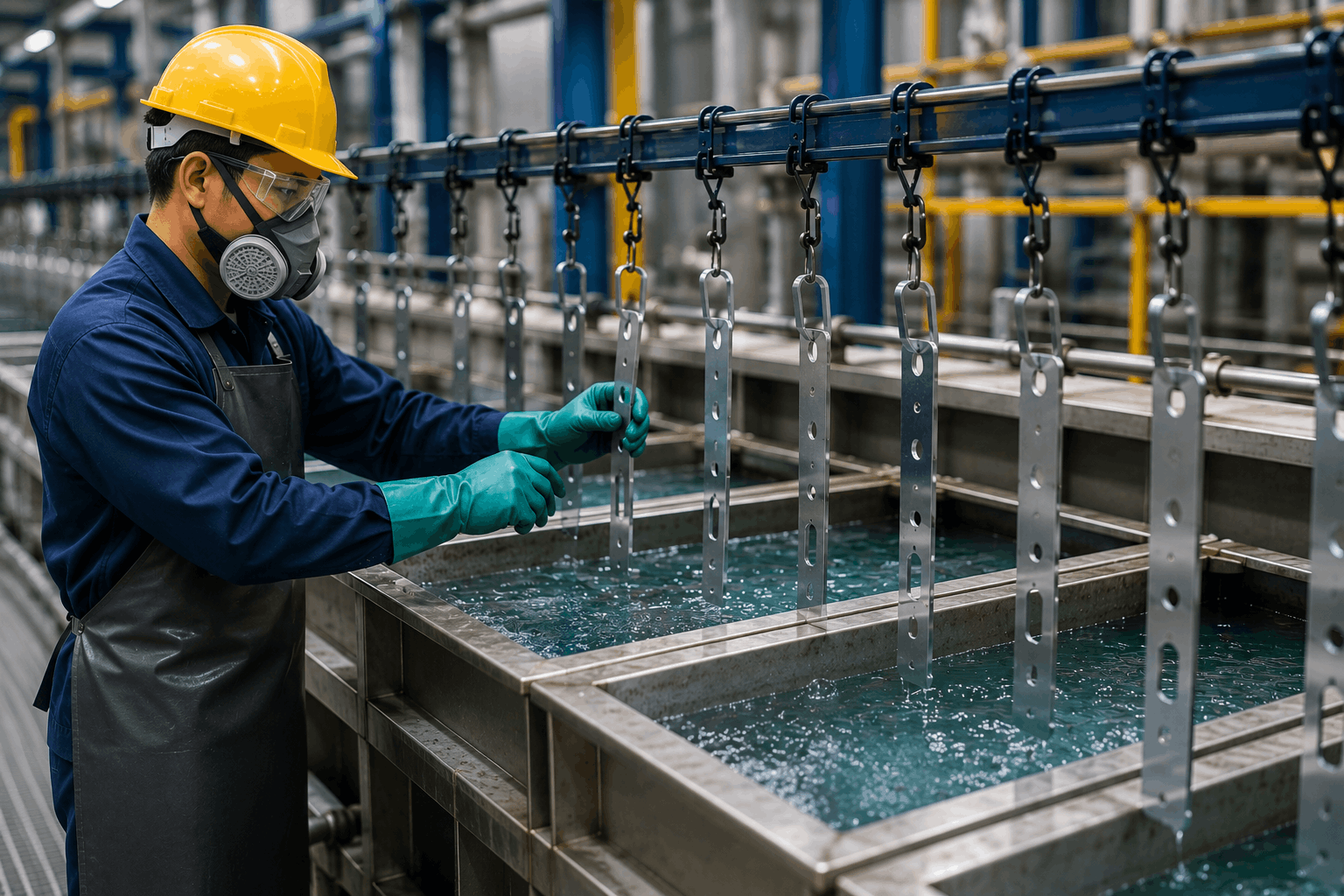
Electroplating is a metal coating process that uses electric current to deposit metal ions onto the workpiece surface. Because it involves controlled chemical reactions and electrical parameters, each stage must be carried out consistently. A minor disruption in one parameter can directly impact the quality of the plating result.
Non-Optimal Surface Preparation
One of the most common causes of electroplating failure is less than optimal pre-treatment processes. Metal surfaces that still contain oil, dust, or thin oxides can inhibit coating adhesion.
If cleaning and activation stages are not performed correctly, the coating can form unevenly or peel easily. In many cases, adhesion problems do not originate from the main plating process but from surface preparation that does not meet standards.
Unstable Process Parameters
Electroplating is highly dependent on electric current settings, immersion time, temperature, and solution concentration. Non-conformity in any of these parameters can cause inconsistent coating thickness or surface defects.
For example, excessively high current can produce rough coatings, while too low current can cause uneven plating. Therefore, regular parameter control is key to maintaining final result quality.
Coating Thickness Not According to Specifications
Coating that is too thin can reduce corrosion resistance, while excessively thick coatings can affect component dimensions and function. Without accurate measurement, plating results risk not meeting established technical standards.
The use of measuring instruments such as thickness meters helps ensure thickness meets specifications. With proper measurement, processes can be evaluated and adjusted before greater deviations occur.
Lack of Quality Control System
Electroplating is not just about technique but also about procedural consistency. Without a documented quality control system, the potential for result variation between batches increases. Process standardization helps ensure each stage is carried out according to established procedures.
PT Sinar Cemaramas Abadi implements the ISO 9001:2015 quality management system as part of its commitment to maintaining consistency and quality of electroplating products. This approach ensures every process is controlled measurably, documented, and evaluated regularly to minimize failure risks.
Prevention is Better than Correction
Problems in electroplating can often be prevented through strict process supervision, periodic testing, and regular parameter evaluation. With a systematic and data-driven approach, coating quality can be maintained consistently.
When every stage is carried out according to standards, failure risks can be minimized and production efficiency maintained. Successful electroplating is not just about good-looking final results, but about a controlled process from start to finish.
References:
- Schlesinger, M., & Paunovic, M. (2018). Modern Electroplating (5th ed.). John Wiley & Sons.
- Lowenheim, F. A. (2019). Electroplating Engineering Handbook. McGraw-Hill Education.
- ASM International. (2020). ASM Handbook, Volume 5: Surface Engineering.
- Kushner, J. B. (2021). Process Variables in Electroplating Operations. Journal of Applied Surface Engineering.
- ISO 9001:2015. Quality Management Systems — Requirements.
Other Articles