Zinc Plating Process and Industrial Benefits

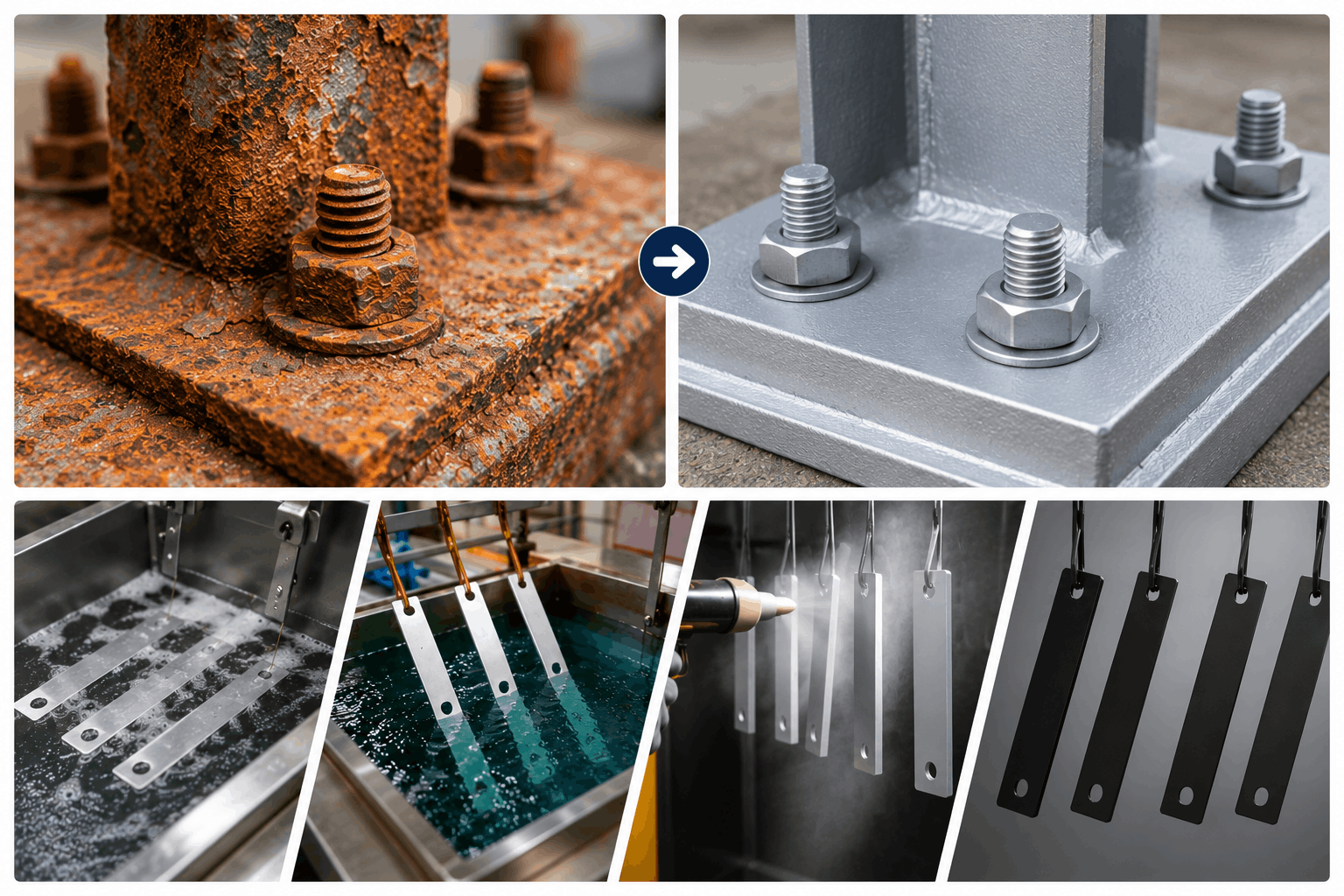
Zinc plating, a widely used electroplating process, involves coating a substrate—typically steel or iron—with a thin layer of zinc. This coating provides significant corrosion resistance, improves appearance, and enhances the durability of metal parts. Recent developments in zinc plating focus on increasing efficiency, enhancing coating quality, and expanding application areas. This article explores key aspects of zinc plating, including its importance, process, innovations, and industrial applications.
Importance of Zinc Plating
Zinc plating is vital in various industries due to its excellent corrosion resistance. The zinc layer acts as a sacrificial anode, corroding before the underlying metal and protecting it from rust and other corrosive elements. This makes it especially valuable in automotive, construction, and appliance industries where exposure to harsh environments is common. Zinc plating also improves the aesthetic appeal of metal parts, offering a clean, shiny finish preferred in consumer products.
The Zinc Plating Process
The zinc plating process includes several key steps: surface preparation, electroplating, and post-treatment. Surface preparation involves cleaning and pickling to remove contaminants. During electroplating, the part is immersed in a zinc electrolyte solution, and an electric current deposits zinc ions onto the substrate. Post-treatment includes rinsing, drying, and applying passivation layers to enhance corrosion resistance and surface properties.
Recent Innovations in Zinc Plating
Technological advancements have improved the efficiency and performance of zinc plating. A notable innovation is the use of trivalent chromium passivation instead of toxic hexavalent chromium. Trivalent chromium provides similar corrosion protection without health risks. New electrolyte formulations have also improved throwing power and coating uniformity, even on complex part geometries.
Enhanced Surface Properties
Zinc plating not only protects metal parts from corrosion but also improves surface characteristics such as smoothness, reflectivity, and hardness. The plated layer provides a uniform texture that enhances adhesion for paints and additional coatings. In industries where visual appeal and surface quality are important—such as electronics and appliances—zinc plating offers a highly adaptable solution. It can also be tailored to deliver specific finishes, including matte, bright, or colored tones, depending on application needs.
Applications in Various Industries
Zinc plating is used across diverse industries for its protective and decorative qualities. In automotive manufacturing, it protects bolts, fasteners, and chassis components. In construction, zinc-plated steel resists environmental damage on outdoor structures. Electronics manufacturers benefit from zinc's conductive and anti-corrosive properties for components like connectors and housings. Its reliability makes it a preferred option for many applications.
Quality Control and Testing
Quality assurance in zinc plating requires thorough testing. Key tests include coating thickness measurement, adhesion checks, and corrosion resistance evaluations such as salt spray testing. Techniques like X-ray fluorescence (XRF) offer precise analysis of coating consistency and composition. Implementing rigorous quality control helps ensure that the plated products meet performance and durability standards.
Cost-Effectiveness and Economic Impact
Zinc plating is considered a cost-effective anti-corrosion solution. Zinc's relatively low cost, combined with its effective protection, supports its use in high-volume production. Process improvements and waste reduction have lowered operational costs, further enhancing its economic viability across industries that require protective finishes for metal components.
Future Trends in Zinc Plating
The future of zinc plating includes ongoing technological improvements and expanded alloy innovations. Trends include integrating automation for precise control, developing high-performance zinc alloys, and applying data-driven monitoring for real-time quality assurance. As demand grows for durable, attractive, and economical coatings, zinc plating remains a core technology in industrial finishing.
Zinc plating remains a key process in the electroplating industry, offering durable, cost-effective, and corrosion-resistant finishes. With ongoing innovations and increased performance expectations, zinc plating continues to evolve to meet industrial demands. By embracing new technologies and advanced formulations, manufacturers can ensure reliable and long-lasting protection for metal components.
References
- "Advancements in Zinc Plating Technology" – Surface Engineering Journal
- "Applications of Zinc Plating in Various Industries" – Industrial Metal Finishing
- "Quality Control in Electroplating" – Electroplating & Surface Finishing
Other Articles